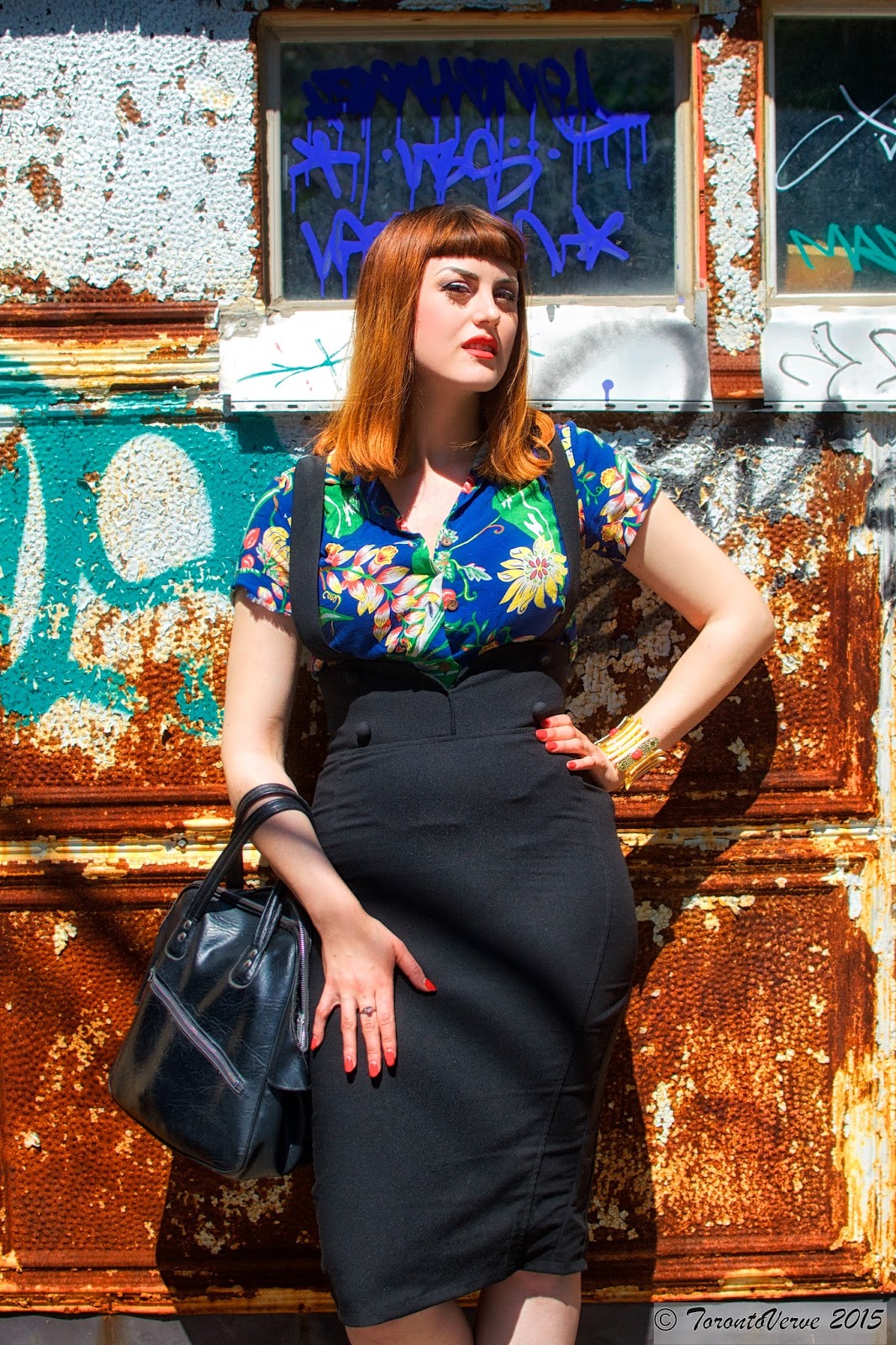
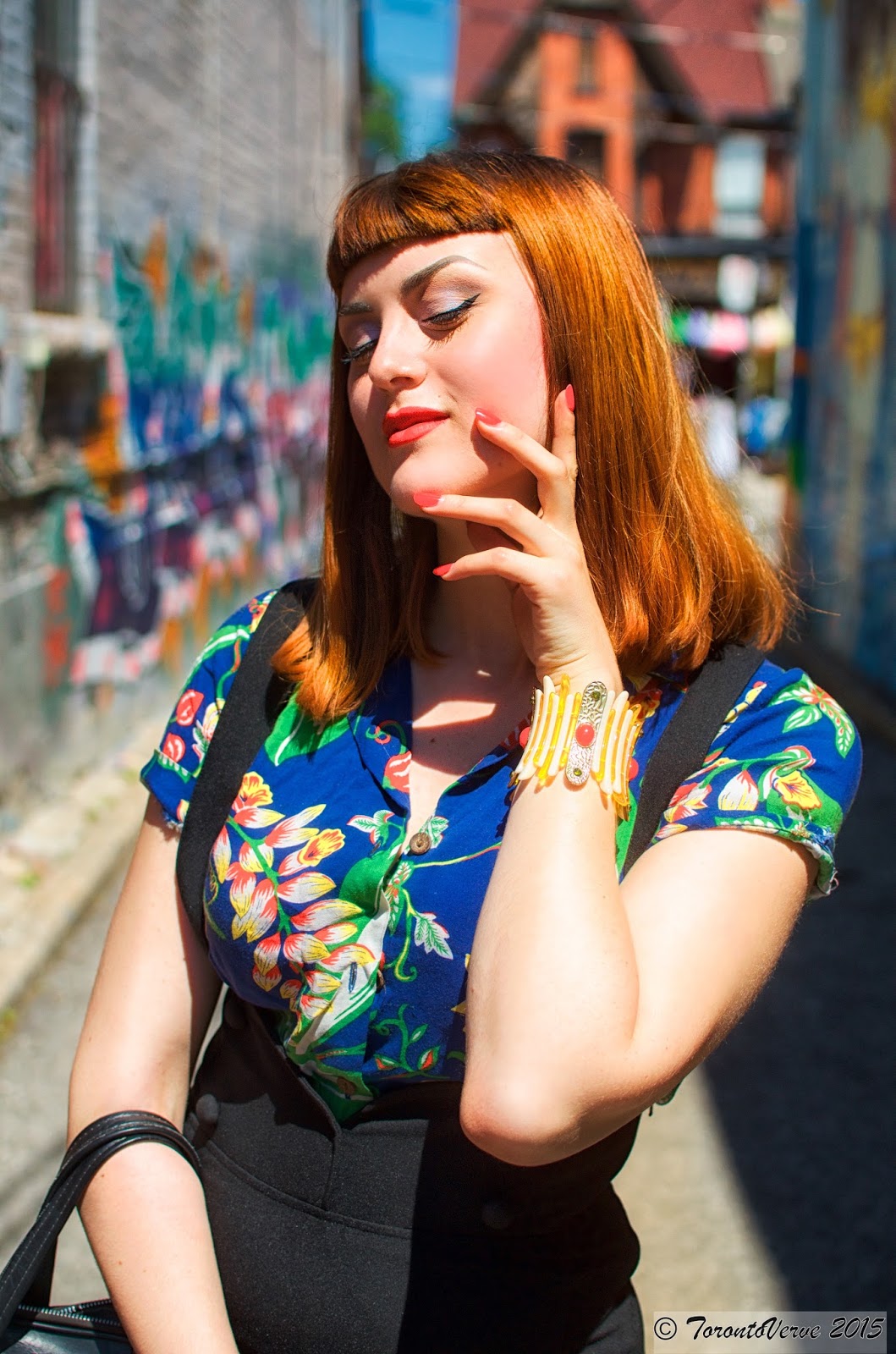
If you're looking to add a little spark to your mundane wardrobe, then you need to head over to The Shop Til You Drop Dead Market this long weekend.
I recently spoke to the owner and founder, Laura Lace, who shared details about her fierce style and what you'll find at the market.
"I like to incorporate
fashion from different eras from the alternative scene like vintage, punk, burlesque,
corsets, goth and metal. It all depends on my daily mood. I've never been into the mainstream."
"I've been collecting fashion from random places my whole life.
Eventually I started selling my items and I've received a lot of
great feedback from my customers. They tell me how much they love the
clothes and my styling tips. I end up becoming friends with a lot of
them because they're such wonderful people."
"In the street, many people walk up to me and
say, "Oh my, God. I love your outfit. Where did you get that?" I'm just
really passionate about my fashion and other passionate people seem to
really appreciate it. Those are the kinds of people that I love
collaborating with. All our vendors bring a piece of themselves into
the market. There are a lot of positive vibes all around."
The
Shop Til You Drop Dead Market happens tomorrow and Monday and every
weekend at 10 Euclid Avenue (Queen and Euclid -- 3 blocks West of Bathurst). "This weekend, we have five new vendors who'll be
selling new club and contemporary wardrobe -- sample pieces of clothing
lines that you can't find anywhere, very unique jewellery, vintage clothing, movie costumes, styles from burlesque to pin-up and men's fashion. We also have CDs, shoes,
boots, hats and electronics. There will even be a DJ
there playing tunes all day and he will be taking requests."
For more information, contact Laura Lace on Facebook or Instagram.
Statcounter
Showing posts with label Artists and Boutiques. Show all posts
Saturday, September 2, 2017
Thursday, November 17, 2016
Sate
Sate: My style is black, powerful, bold and sexy. I'm inspired by risk takers who are unafraid of who they want to be.
TorontoVerve: What's the best advice you've been given?
Sate: My mother shared her sister's words, "It's in the struggle that makes life worth while." That reminds me that the struggle is never permanent. It's getting through that struggle that's worth it.
Sate is the lead singer of her own rock band. "People have described us as Tina Turner heading Black Sabbath," she says. "Hard rock, punk and metal are a part of my soul."
Catch Sate's performance tonight at the Horseshoe Tavern.
Follow Sate on Instagram.
Tuesday, October 13, 2015
Supreme Being Unit's Mindbender & Conspiracy
Meet twin brothers Addi and Khari (38). Their alter-egos, Mindbender and Conspiracy, make up the cosmic hip hop band Supreme Being Unit.
Addi AKA Mindbender (right): Our music is everything in the universe. Everyone who is touched by it is part of the Supreme Being Unit — whether you love it or hate it. We’re all one entity. It’s the core of Bob Marley’s One Love idea. Without hate, there is no love. As Conspiracy and Mindbender, we’re two of the most dynamic MCs in all of hip hop history — I would humbly suggest to say. We rap about everything in the universe: science, religion, women, art, sex, sports, comedy and cartoons. There’s no subject that will not appear in a Supreme Being Unit song. Both of our minds together pretty much span the entire universe. It’s a wild statement, but if you listen to our music, I think you would agree.
Khari AKA Conspiracy (left): Personally, I like Mindbender’s fashion. He’s got the GQ style. He’s a gentleman and has that grown up style with a little bit of a vintage and exotic flair. I’m more the original B-Boy. I wear a lot of athletic wear like hockey jerseys. I love wearing black. I was the first born, but Addi is a bit more wiser and mature than me. We’re opposites that are the same.
Addi: I want to redefine sexual culture. Not only within hip hop, but within Canadian society by being the example of living-breathing positive sexuality that I am, and by being shameless; which is why I never hide my sexuality. When I feel sexy, I let it out. I don’t hide it. I’m not breaking any laws by walking down the street with my chest out. I don’t repress myself or my fashion or my flair for being masculine one day or feminine another. I have some asexual clothing. I feel very much a man wearing vaguely effeminate clothing like really tight shirts or a male bustier. I really don’t give a f@%k. Not every man has the balls to wear what I wear. If it’s me and my spirit, then I’m cool with it. It’s not about everybody fitting into one thing.
Khari: I support Mindbender’s pro-feminine and masculine viewpoints. I think human sexuality needs to be developed and explored to divine and cosmic levels. Negativity between the two sexes and against the gay community needs to stop. It’s all about positivity. We want peace for everybody.
Addi AKA Mindbender (right): Our music is everything in the universe. Everyone who is touched by it is part of the Supreme Being Unit — whether you love it or hate it. We’re all one entity. It’s the core of Bob Marley’s One Love idea. Without hate, there is no love. As Conspiracy and Mindbender, we’re two of the most dynamic MCs in all of hip hop history — I would humbly suggest to say. We rap about everything in the universe: science, religion, women, art, sex, sports, comedy and cartoons. There’s no subject that will not appear in a Supreme Being Unit song. Both of our minds together pretty much span the entire universe. It’s a wild statement, but if you listen to our music, I think you would agree.
Khari AKA Conspiracy (left): Personally, I like Mindbender’s fashion. He’s got the GQ style. He’s a gentleman and has that grown up style with a little bit of a vintage and exotic flair. I’m more the original B-Boy. I wear a lot of athletic wear like hockey jerseys. I love wearing black. I was the first born, but Addi is a bit more wiser and mature than me. We’re opposites that are the same.
Addi: I want to redefine sexual culture. Not only within hip hop, but within Canadian society by being the example of living-breathing positive sexuality that I am, and by being shameless; which is why I never hide my sexuality. When I feel sexy, I let it out. I don’t hide it. I’m not breaking any laws by walking down the street with my chest out. I don’t repress myself or my fashion or my flair for being masculine one day or feminine another. I have some asexual clothing. I feel very much a man wearing vaguely effeminate clothing like really tight shirts or a male bustier. I really don’t give a f@%k. Not every man has the balls to wear what I wear. If it’s me and my spirit, then I’m cool with it. It’s not about everybody fitting into one thing.
Khari: I support Mindbender’s pro-feminine and masculine viewpoints. I think human sexuality needs to be developed and explored to divine and cosmic levels. Negativity between the two sexes and against the gay community needs to stop. It’s all about positivity. We want peace for everybody.
Check out Supreme Being Unit's music.
Thursday, September 10, 2015
Amie DiCarlo
Jewellery: Artemis Boutique
Amie is a fashion stylist, image consultant and the founder of Artemis Boutique.
Follow Amie on Instagram, Facebook and Twitter.
We previously captured Amie's streets style three years ago.
Tuesday, September 8, 2015
Tuesday, August 25, 2015
Sarah London Bergman
As a freelance make-up artist, Sarah London Bergman has made many of her customers happy by making them either look beautiful or hideous. While shooting her vintage street style in Kensington Market, we had an interesting talk with Bergman about her love of beauty and the macabre.
Sarah: "My style is influenced by Kimono fabrics, Polynesian pop and early fetish magazines that were once illegal to sell. To this day, when you look at those vintage photos, they're still very racy. I have a morbid fascination with fashion and visual culture. I also have a love for b-movies, monster archetypes and wholesome images from the mid-century. That mixture is both ironic and strange. They kind of turn things on its head in a playful way."
TorontoVerve: "You told me that, as a make-up artist, you prefer doing make-up on movie corpses rather than fashion models. Why is that?"
Sarah: "(Laughs) Don't get me wrong -- I love super-high fashion and pin-up beauty. I often get asked to do pin-up looks, but I really enjoy creepy, organic and morbid special-effects techniques. It sounds counter-intuitive, but when I do special-effects looks, I get to be more impressionistic with my colour palette -- especially when working on zombies. For me, there's less pressure in horror than in fashion."
TorontoVerve: "Who are your fashion role models?"
Sarah: "Living or dead?"
TorontoVerve: "Either."
Sarah: "I would say Faster Pussy Cat Kill Kill's Tura Santana. She was a human representation of those really mean fetish babes in vintage magazines, but she was real. It's rare when those illustrations become reality. She was one of those mean and scary women who was empowering. I always thought that she was this badass babe who had these crazy curves, which she often used as weapons. She was a warrior. She also wore these slanted and wild eyebrows as if they were warpaint."
TorontoVerve: "How do you think pin-up culture has stood the test of time?"
Sarah: "I think that pin-up is increasing in popularity because of the internet and social media. The 50's revival seems to come in vogue more and more every decade since the 70's. We're inundated with pin-up images only because they're more accessible now."
TorontoVerve: "Are you a fan of Bettie Page?"
Sarah: "Bettie Page had a magnificent presence in front of the camera, but so did so many other women. I understand her celebrity. She had a lot of charisma, but she's also a bit of a walking cliché. There were so many other interesting women in that genre around her time and after. I think Bettie's great, but her cult is a bit excessive."
TorontoVerve: "What has surprised you the most about yourself this year?"
Sarah: "I recently realized that I'm more of a Type-B. I really enjoy relaxing and sleeping in. Sometimes having a Type-A personality can be damaging. For instance, some people in my industry work extremely hard and have no work-life balance. I find my friends and my recreational time precious. I work really hard, but I also find time to gratify myself and there's nothing wrong with that."
Follow Sarah Bergman on Instagram and Facebook.
Check out her incredible work at SarahLondonMakeUp.com.
Sarah: "My style is influenced by Kimono fabrics, Polynesian pop and early fetish magazines that were once illegal to sell. To this day, when you look at those vintage photos, they're still very racy. I have a morbid fascination with fashion and visual culture. I also have a love for b-movies, monster archetypes and wholesome images from the mid-century. That mixture is both ironic and strange. They kind of turn things on its head in a playful way."
TorontoVerve: "You told me that, as a make-up artist, you prefer doing make-up on movie corpses rather than fashion models. Why is that?"
Sarah: "(Laughs) Don't get me wrong -- I love super-high fashion and pin-up beauty. I often get asked to do pin-up looks, but I really enjoy creepy, organic and morbid special-effects techniques. It sounds counter-intuitive, but when I do special-effects looks, I get to be more impressionistic with my colour palette -- especially when working on zombies. For me, there's less pressure in horror than in fashion."
TorontoVerve: "Who are your fashion role models?"
Sarah: "Living or dead?"
TorontoVerve: "Either."
Sarah: "I would say Faster Pussy Cat Kill Kill's Tura Santana. She was a human representation of those really mean fetish babes in vintage magazines, but she was real. It's rare when those illustrations become reality. She was one of those mean and scary women who was empowering. I always thought that she was this badass babe who had these crazy curves, which she often used as weapons. She was a warrior. She also wore these slanted and wild eyebrows as if they were warpaint."
TorontoVerve: "How do you think pin-up culture has stood the test of time?"
Sarah: "I think that pin-up is increasing in popularity because of the internet and social media. The 50's revival seems to come in vogue more and more every decade since the 70's. We're inundated with pin-up images only because they're more accessible now."
TorontoVerve: "Are you a fan of Bettie Page?"
Sarah: "Bettie Page had a magnificent presence in front of the camera, but so did so many other women. I understand her celebrity. She had a lot of charisma, but she's also a bit of a walking cliché. There were so many other interesting women in that genre around her time and after. I think Bettie's great, but her cult is a bit excessive."
TorontoVerve: "What has surprised you the most about yourself this year?"
Sarah: "I recently realized that I'm more of a Type-B. I really enjoy relaxing and sleeping in. Sometimes having a Type-A personality can be damaging. For instance, some people in my industry work extremely hard and have no work-life balance. I find my friends and my recreational time precious. I work really hard, but I also find time to gratify myself and there's nothing wrong with that."
Follow Sarah Bergman on Instagram and Facebook.
Check out her incredible work at SarahLondonMakeUp.com.
Wednesday, June 17, 2015
A Conversation with MasterChef Canada's Michael Motamedi
Michael Motamedi’s sharp style and signature moustache made him one of MasterChef Canada Season 2's most colourful contestants. Unfortunately, for Motamedi (29), a little pink in his fried chicken abruptly ended his dream of becoming MasterChef.
TorontoVerve recently met with the fashionable entrepreneur to talk about the show, men’s fashion and the wood in his pocket.
TorontoVerve: You’re probably sick and tired of talking about raw fried chicken now, right?
Michael Motamedi: I have a new look on fried chicken that’s for sure. For some reason, things don’t bother me much anymore. One day it bothers me and the next, I don’t even remember it happened. Everybody always asks me, ‘can you still eat fried chicken?’ I tell them, ‘listen, this happened months ago. I’m over it.’
TV: So what was your impression of Season 2’s finale?
MM: Actually, I didn’t watch it (laughs). I was lounging in an Infinity pool in Nicaragua. You might have noticed that I wasn’t on the finale. Shortly after I got knocked off, I found out my grandpa passed away. I had to fly to LA right away to be with my family.
TV: What would you have done if you weren’t kicked off when you were?
MM: I would have left anyways. That’s why I was at peace about leaving the show. My grandfather and I were pretty close. MasterChef is great and all, but….I live my life on respect. I have respect for people, respect for things and respect for life. Sometimes the respect you have for others outweighs your own interests.
TV: What was your least favourite experience on MasterChef Canada?
MM: The worst experience was dealing with some of the characters on the show, and they shall remain nameless. As much as they say in their interviews: ‘I’m not like that in real life.” I tell them, ‘No, you’re worse, dude.’ People tell me I was very arrogant on the show. Sorry. I’m not going to deny that’s who I was because that’s who I am.
TV: Are you happy with the way that you were portrayed on the show?
MM: Yes, I’m fine with it. The point of a TV show is to gain viewership. The show doesn't care about what contestants read at night. No, it's reality-television. They want us to cook, get stressed out and bother each other.
TV: On the show, there was a V on your pie, which you revealed on Twitter was the initial of the love of your life. Can you tell us more about who V is?
[Before Michael answered, I deduced that the love of his life is Vanessa — the young lady who accompanied us on our photoshoot and who was presently sitting at his side as we sipped drinks on the patio.]
MM: When we got together, it was an immediate sense of instinct where I told myself, ’Listen, buddy. You’re not going anywhere but up from here, ok? She’s the best thing that’s ever walked into your life.' She’s absolutely gorgeous, extremely smart and socially aware. Fortunately for me, she’s very fashion-oriented. Fashion is important. People say it’s superficial, but Tom Ford said, ‘Dressing is a form of good manners,’ and I believe that. So fashion’s not entirely superficial. She’s the whole package.
TV: How do you feel about your celebrity after the show?
MM: I was very social before MasterChef. People I knew always came up to me. I couldn’t walk down King street without 20 people saying hello. But now, random people off the street are coming up to me. The other day, I was going to a meeting and this really nice lady, who stopped me in the subway, totally walked out of her way to have a five minute conversation with me. It’s cool.
TV: What kind of kid were you growing up?
MM: I grew up in California. I was an only child. Pretty rambunctious. We weren’t the richest, but we had a comfortable life. The city I grew up in is what everyone calls "The Kardashian City": Calabasas. Nobody knew who the Kardashians were back then. I was very spoiled. My parents said, ‘After you, we’re not having more kids. That’s for sure (laughs).’ I always wanted to be the centre of attention.
TV: In a recent interview you said that you’re “very whitewashed.” How are you whitewashed?
MM: (Laughs) There are so many things about the Persian culture that I’m attracted to, but also a lot of things that I’m not. California Persians are all like me. They don’t speak Farsi much, they like to hang out in Malibu and surf. The Persians here (Toronto) always speak Farsi to each other and they’re always arguing over the bill. That’s not me.
TV: So when did you begin to take cooking seriously in your life?
MM: I always loved cooking, but I would say I took it seriously five years ago. Before that, I was like, ‘Hey, let’s make pasta Alfredo with shrimp.’ It tasted great. My dad would tell me to go to culinary school. But it really jump started three years ago when I met Vanessa. I guess I wanted to show off to her or maybe it was because she doesn't cook much (laughs). Food is fashion. I pride myself on plating food as much as I style myself. In my opinion, fashion is a lifestyle. It's more than clothes. It resides in your whole life. Now my food is looking sexier.
TV: How would you describe your style?
MM: Casual chic. If I wear a suit, I’m wearing Converse with it. Lately, I’m feeling super modern. I don’t want to wear ties because that’s too traditional. My life is really moving now. I’m into dressing modern because I’m looking forward to the future.
TV: How would you describe the state of men’s fashion in Toronto?
MM: It’s so awesome. It’s come so far in the last ten years. Toronto Men’s Fashion Week has a lot to do with it. The Gotstyle's of the world have a lot to do with it. The Harry Rosen’s aren't the big dogs anymore. You can go to a Bespoke tailor right now and spend seven hundred bucks for a tailor fit suit — that’s unheard of. Ten years ago, it was $2500. Young cats working at banks or tech guys making $100,000 a year can have the same wardrobe as a guy making $250,000 a year. Individuality is so cool. You see guys wearing red suits on a casual Monday afternoon. The cats I hang out with are going to the grocery store wearing a 3-piece suit (laughs). That’s cool!
TV: Nowadays, it seems like guys don’t want to experiment much with colour.
MM: That whole Rick Owens movement kinda put a hold on all that. His stuff is unbelievable, but it’s not my style. You know, that Kanye West black shirt-skirt type thing? Black on black on black on black. But men’s fashion is always evolving. I’m always evolving. Two months will go by and I won’t wear anything but a suit. Another two months goes by and I won’t touch a jacket. And then another month will go by and I’ll just wear v-neck t-shirts. It doesn’t matter what sort of evolution you have. Just evolve. There has to be movement in your life because sometimes life can be mundane. You can't easily change your 9 to 5 job, but you can easily change your style.
TV: What style tips can you give men for the summer?
MM: Keep it simple. You don’t always have to be formal to look good. I’m in a very cohesive state of mind right now. I’m wearing a white-collared shirt with white sneaks and blue pants. This watch ties it together nicely. I don’t like too much colour. I just keep it simple.
TV: Tell us about Baffi Collection.
MM: Baffi Collection started out with me and a buddy over drinks — that's how most great ideas start. Long story short, we invented the first wooden pocket squares. The thing I love about it is — again, it’s about evolution. There hasn’t been something in men’s fashion that’s changed in 50 years, but fashion has changed. I can say that we’ve invented something new. People are always scared of new things. Wooden pocket squares are our flagship product. We’re coming out with a lot of different shapes this season. The summer collection is absolutely amazing. We’ve learned a lot from our last collection. We had watermelon designs here, orange here and stripes there. Now we have paisleys, Spanish mosaics and florals. We also do lapel pins, which double as tie clips, and they’re all magnetized. We’re just signing a contract with Cuffwear to do a test piece with cufflinks in cufflink vending machines that are coming out.
TV: You and your partners were on another reality-TV show, Dragon's Den, which hasn’t aired yet. Can you share anything about that?
MM: We did go on Dragon’s Den for the Baffi Collection. There were a couple of Dragons that we wanted to get — so obviously we programmed our pitch to attract them. I won't say much else. The public will have to wait and see.
TV: So you definitely have a strategy when you go on these reality shows. What was your strategy on MasterChef?
MM: My strategy was to have extreme confidence. Never show weakness. Even if I knew there were 10 things wrong with my dish, you better believe I’m still going to say it’s amazing. My second strategy was always do something unique. Every dish I made was completely weird and bizarre. Everything had a story behind it. Vanessa is my muse in my everyday life. She obviously played a role in my cooking. I’m a mama’s boy so my mother was also my inspiration. Inspiration is 50% of motivation.
TV: But you did show a little vulnerability when you were cooking the fried chicken.
MM: Well, I've never cooked fried chicken. Call me spoiled, I don’t frickin' de-bone chickens every day. I don’t chop them up.
TV: So you had to know how to cook fried chicken in advance? They don’t teach you?
MM: No, they don’t. And I was competing against Sabrina who probably grew up on a farm somewhere, and Line (pronounced “Lynn”) from Moncton who probably killed chickens with her bare hands every day. I don’t know chickens. I live in Toronto over a Loblaws.
TV: Ok, I have to ask — in your Baffi commercial, who came up with the funny double entendre: “is that wood in his pocket?”
MM: (Laughs) One of our investors came up with it. She’s hilarious. We all laughed our asses off. Who doesn’t want a little wood in their pocket?
Follow Michael on Twitter and Instagram!
MasterChef Canada Season 3 casting is open now at CTV.ca/MasterChefCanada.
A special thanks to Gotstyle Distillery for opening their doors for our photoshoot!
Check out the Baffi Collection commercial below:
TorontoVerve recently met with the fashionable entrepreneur to talk about the show, men’s fashion and the wood in his pocket.
TorontoVerve: You’re probably sick and tired of talking about raw fried chicken now, right?
Michael Motamedi: I have a new look on fried chicken that’s for sure. For some reason, things don’t bother me much anymore. One day it bothers me and the next, I don’t even remember it happened. Everybody always asks me, ‘can you still eat fried chicken?’ I tell them, ‘listen, this happened months ago. I’m over it.’
TV: So what was your impression of Season 2’s finale?
MM: Actually, I didn’t watch it (laughs). I was lounging in an Infinity pool in Nicaragua. You might have noticed that I wasn’t on the finale. Shortly after I got knocked off, I found out my grandpa passed away. I had to fly to LA right away to be with my family.
TV: What would you have done if you weren’t kicked off when you were?
MM: I would have left anyways. That’s why I was at peace about leaving the show. My grandfather and I were pretty close. MasterChef is great and all, but….I live my life on respect. I have respect for people, respect for things and respect for life. Sometimes the respect you have for others outweighs your own interests.
TV: What was your least favourite experience on MasterChef Canada?
MM: The worst experience was dealing with some of the characters on the show, and they shall remain nameless. As much as they say in their interviews: ‘I’m not like that in real life.” I tell them, ‘No, you’re worse, dude.’ People tell me I was very arrogant on the show. Sorry. I’m not going to deny that’s who I was because that’s who I am.
TV: Are you happy with the way that you were portrayed on the show?
MM: Yes, I’m fine with it. The point of a TV show is to gain viewership. The show doesn't care about what contestants read at night. No, it's reality-television. They want us to cook, get stressed out and bother each other.
TV: On the show, there was a V on your pie, which you revealed on Twitter was the initial of the love of your life. Can you tell us more about who V is?
[Before Michael answered, I deduced that the love of his life is Vanessa — the young lady who accompanied us on our photoshoot and who was presently sitting at his side as we sipped drinks on the patio.]
MM: When we got together, it was an immediate sense of instinct where I told myself, ’Listen, buddy. You’re not going anywhere but up from here, ok? She’s the best thing that’s ever walked into your life.' She’s absolutely gorgeous, extremely smart and socially aware. Fortunately for me, she’s very fashion-oriented. Fashion is important. People say it’s superficial, but Tom Ford said, ‘Dressing is a form of good manners,’ and I believe that. So fashion’s not entirely superficial. She’s the whole package.
TV: How do you feel about your celebrity after the show?
MM: I was very social before MasterChef. People I knew always came up to me. I couldn’t walk down King street without 20 people saying hello. But now, random people off the street are coming up to me. The other day, I was going to a meeting and this really nice lady, who stopped me in the subway, totally walked out of her way to have a five minute conversation with me. It’s cool.
TV: What kind of kid were you growing up?
MM: I grew up in California. I was an only child. Pretty rambunctious. We weren’t the richest, but we had a comfortable life. The city I grew up in is what everyone calls "The Kardashian City": Calabasas. Nobody knew who the Kardashians were back then. I was very spoiled. My parents said, ‘After you, we’re not having more kids. That’s for sure (laughs).’ I always wanted to be the centre of attention.
TV: In a recent interview you said that you’re “very whitewashed.” How are you whitewashed?
MM: (Laughs) There are so many things about the Persian culture that I’m attracted to, but also a lot of things that I’m not. California Persians are all like me. They don’t speak Farsi much, they like to hang out in Malibu and surf. The Persians here (Toronto) always speak Farsi to each other and they’re always arguing over the bill. That’s not me.
TV: So when did you begin to take cooking seriously in your life?
MM: I always loved cooking, but I would say I took it seriously five years ago. Before that, I was like, ‘Hey, let’s make pasta Alfredo with shrimp.’ It tasted great. My dad would tell me to go to culinary school. But it really jump started three years ago when I met Vanessa. I guess I wanted to show off to her or maybe it was because she doesn't cook much (laughs). Food is fashion. I pride myself on plating food as much as I style myself. In my opinion, fashion is a lifestyle. It's more than clothes. It resides in your whole life. Now my food is looking sexier.
TV: How would you describe your style?
MM: Casual chic. If I wear a suit, I’m wearing Converse with it. Lately, I’m feeling super modern. I don’t want to wear ties because that’s too traditional. My life is really moving now. I’m into dressing modern because I’m looking forward to the future.
TV: How would you describe the state of men’s fashion in Toronto?
MM: It’s so awesome. It’s come so far in the last ten years. Toronto Men’s Fashion Week has a lot to do with it. The Gotstyle's of the world have a lot to do with it. The Harry Rosen’s aren't the big dogs anymore. You can go to a Bespoke tailor right now and spend seven hundred bucks for a tailor fit suit — that’s unheard of. Ten years ago, it was $2500. Young cats working at banks or tech guys making $100,000 a year can have the same wardrobe as a guy making $250,000 a year. Individuality is so cool. You see guys wearing red suits on a casual Monday afternoon. The cats I hang out with are going to the grocery store wearing a 3-piece suit (laughs). That’s cool!
TV: Nowadays, it seems like guys don’t want to experiment much with colour.
MM: That whole Rick Owens movement kinda put a hold on all that. His stuff is unbelievable, but it’s not my style. You know, that Kanye West black shirt-skirt type thing? Black on black on black on black. But men’s fashion is always evolving. I’m always evolving. Two months will go by and I won’t wear anything but a suit. Another two months goes by and I won’t touch a jacket. And then another month will go by and I’ll just wear v-neck t-shirts. It doesn’t matter what sort of evolution you have. Just evolve. There has to be movement in your life because sometimes life can be mundane. You can't easily change your 9 to 5 job, but you can easily change your style.
TV: What style tips can you give men for the summer?
MM: Keep it simple. You don’t always have to be formal to look good. I’m in a very cohesive state of mind right now. I’m wearing a white-collared shirt with white sneaks and blue pants. This watch ties it together nicely. I don’t like too much colour. I just keep it simple.
TV: Tell us about Baffi Collection.
MM: Baffi Collection started out with me and a buddy over drinks — that's how most great ideas start. Long story short, we invented the first wooden pocket squares. The thing I love about it is — again, it’s about evolution. There hasn’t been something in men’s fashion that’s changed in 50 years, but fashion has changed. I can say that we’ve invented something new. People are always scared of new things. Wooden pocket squares are our flagship product. We’re coming out with a lot of different shapes this season. The summer collection is absolutely amazing. We’ve learned a lot from our last collection. We had watermelon designs here, orange here and stripes there. Now we have paisleys, Spanish mosaics and florals. We also do lapel pins, which double as tie clips, and they’re all magnetized. We’re just signing a contract with Cuffwear to do a test piece with cufflinks in cufflink vending machines that are coming out.
TV: You and your partners were on another reality-TV show, Dragon's Den, which hasn’t aired yet. Can you share anything about that?
MM: We did go on Dragon’s Den for the Baffi Collection. There were a couple of Dragons that we wanted to get — so obviously we programmed our pitch to attract them. I won't say much else. The public will have to wait and see.
MM: My strategy was to have extreme confidence. Never show weakness. Even if I knew there were 10 things wrong with my dish, you better believe I’m still going to say it’s amazing. My second strategy was always do something unique. Every dish I made was completely weird and bizarre. Everything had a story behind it. Vanessa is my muse in my everyday life. She obviously played a role in my cooking. I’m a mama’s boy so my mother was also my inspiration. Inspiration is 50% of motivation.
TV: But you did show a little vulnerability when you were cooking the fried chicken.
MM: Well, I've never cooked fried chicken. Call me spoiled, I don’t frickin' de-bone chickens every day. I don’t chop them up.
TV: So you had to know how to cook fried chicken in advance? They don’t teach you?
MM: No, they don’t. And I was competing against Sabrina who probably grew up on a farm somewhere, and Line (pronounced “Lynn”) from Moncton who probably killed chickens with her bare hands every day. I don’t know chickens. I live in Toronto over a Loblaws.
TV: Ok, I have to ask — in your Baffi commercial, who came up with the funny double entendre: “is that wood in his pocket?”
MM: (Laughs) One of our investors came up with it. She’s hilarious. We all laughed our asses off. Who doesn’t want a little wood in their pocket?
* * *
Follow Michael on Twitter and Instagram!
MasterChef Canada Season 3 casting is open now at CTV.ca/MasterChefCanada.
A special thanks to Gotstyle Distillery for opening their doors for our photoshoot!
Check out the Baffi Collection commercial below:
Friday, May 15, 2015
Nana & Jonferd: "Remain Giant"
Nana (left): "My style is 'Fresh Prince meets Steve Urkle.'
TorontoVerve: "What do you like about Urkle?"
Nana: "He was geeky. I liked how he always rolled up his pants. He never tried to change his style -- except when he became Stefan."
Jonferd (right): "My style is a little thrift store mixed with a little 90's flair. Will Smith from the Fresh Prince era inspires me."
TorontoVerve: "What are you the most proud of this year?"
Jonferd: "I just performed at Canadian Music Week. My band is called Remain Giant and we play indie hip hop. Nana is our producer."
Check out Remain Giant's cool beats on Soundcloud and find out more about the band on their website.
Follow Remain Giant on Twitter and Instagram.
Tuesday, May 12, 2015
Carol
Carol: "My style is always personal and enigmatic. I don't have any inspirations other than this little girl inside of me who inspires me to wear something different every day."
TorontoVerve: "What has surprised you the most about yourself?"
Carol: "Two years ago, I quit my miserable job as a labour and human rights lawyer, and for the next six months, I rode my bike from Vancouver to Mexico alone. I started working for a fashion designer in Mexico and that's when I really heard my calling in fashion."
Carol is the founder of Prêt-à-Prêter -- a clothing library and stylist service. "We rent and sell unique high-end vintage clothing."
Follow Carol on Instagram and Facebook.
Monday, January 26, 2015
Actress Katie Boland: What Happened After 'the Summer She Lost Her Mind'
For everyone, heartbreak is a painful and unwelcomed emotion, but for actress Katie Boland (The Master, Gerontophilia, CW’s Reign), it would also be her serendipitous source of inspiration. Her web-series, Long Story, Short, boldly recounts every sad and humiliating detail of what she calls ‘the summer I lost my mind’, and has quickly gained a huge internet following.
Boland’s relationship sorrows also strongly influence her first novel, Eat Your Heart Out, a collection of dark and evocative short stories, and most recently her Huffington Post article about breaking the cycle of abuse.
Indeed, much has happened to the Toronto-native since she was recognized by Elle Canada and the Toronto International Film Festival for her impressive film work. TorontoVerve sat down with the multi-faceted artist to talk about her career success and her relationship woes.
TorontoVerve: You’re a hard working actor. You’ve worked in so many mediums: movies, television, print and digital. Have I missed anything?
Katie Boland: No (laughs).
TV: Can you sing?
KB: No, I can’t sing. I’m actually a terrible singer.
TV: So no future albums coming out for you.
KB: No, no album (laughs).
TV: It’s 2015. How did you ring in the new year?
KB: I was at a house party with my brother and my closest friends. I rang in the New Year in a wonderful way. I was really happy.
TV: What’s your New Year’s resolution?
KB: I have a couple. First, I’d like to be more focussed on self-acceptance and less focussed on self-improvement. Also, this past year was amazing and I’ve had an abundance of experiences, but I definitely feel a little burnt out so I’d like to rest more in 2015.
TV: 2014 has certainly been good to you. Long Story, Short launched and you won a Canadian Screen Award for Best Performance in a Digital Series. The show is being compared to HBO’s “Girls.” What was your vision for the series when you began writing it?

KB: I wrote it because I wanted to explore that period in my life, which I call “the summer I lost my mind,” but to be honest, I didn’t necessarily have a clear vision. I’ve never written anything for the screen before and I’ve never been a showrunner. I didn’t know what to expect, but I knew that I wanted to make something with my friends. So I think my vision was to work hard and try to have a collaborative space. My mom directed it. She’s an incredibly hard worker so I knew that it would look good, but I did not think that it would have the life that it’s had. It’s been a wonderful surprise.
TV: What kind of response have you been getting from people on the street and social media?
KB: Well, it’s been really interesting with its most recent launch on VervegirlTV. I’ve gotten so many tweets from many people who would say, “This feels like a transcript of my life” or “Wow! I really relate to this” or “These drunken mishaps are hilarious and sad.” I think I felt very alone during that time, but I shouldn’t have because I think that many people have gone through similar experiences in trying to find themselves in destructive and hilarious ways.
TV: The women in the series offer each other much advice when it comes to texting men. For those who haven’t seen the series yet, what are some of the important rules to know about texting and dating?
KB: (Laughs) OK, I always screw it up! I always say I’m going to play it cool and then I can’t -- especially if I like the guy. So I don’t know if I should be giving this kind of advice, but I think hopefully you meet somebody and it clicks, and you don’t have to worry about all of that stuff. You can text them whenever you want to and vice-versa. I think what’s important to work on before you fall in love or start dating someone you like is to have self-esteem and know your self-worth so when you’re texting someone and they don’t text you back, it won’t be a major heartbreak. You can say, “OK, this person isn’t ready. I’m not going to take it personally and let it ruin my day.” For me, it used to be when a guy didn’t text me back, I was like, “Oh my God! Why?!” I’d be consumed by it. So my rules are: try to date someone kind because life is hard. It should be fun at the beginning.
TV: You’ve worked with your mother, director Gail Harvey, on film projects before, but what does it mean to you to collaborate with her on such a personal project?
KB: She’s very supportive and nonjudgmental. It was really the first time we collaborated. She is more experienced than I am as far as filmmaking goes so she didn’t have to be as supportive as she was. It was amazing. I felt really grateful.
TV: Did she ever have to tell you, “Let’s dial it back a little. This is too crazy.”
KB: Well, I directed the sex scenes, not my mom. That would be awkward for the guys (laughs). No, she never asked to dial it back. If anything, I felt like we both wanted to push it farther than we did.
TV: Long Story, Short is partly based on your own personal heartbreaks and in your book (“Eat Your Heart Out”) dedication, you credit Peter for your heartbreak, which led to writing the book. What have you learned about yourself through your heartbreaks?
KB: I learned a library worth of knowledge. I would say that I had two really major heartbreaks: my first and last breakups. I felt almost reinvented through each experience. It sounds cheesy, but I felt like a whole new person in a way. I’ve learned that you have to love yourself and deal with whatever’s screwed up inside of you because another relationship is not going to fix it. I learnt to be strong and to be OK with being alone. I learned to make art out of bad things that happen to me. Sometimes the worst things that happen to you are actually the greatest gifts in the world.
TV: So what do your heartbreakers think of your art?
KB: Peter is great. He told me that he was touched by the book dedication and that he really liked Long Story, Short. He and I are still very good friends. I think the response has mainly been positive. That’s the weird thing about relationships. You can be so close and then you never see each other again (laughs).
TV: That can also be a good thing.
KB: Sometimes that has to happen (laughs).
TV: Alcoholism plays a big part in your web series and in your book. Since both draw heavily on your life, is it safe to say that you’ve been personally confronted with the hardships of alcoholism?
KB: Yeah, definitely people close to me have struggled with alcoholism and addiction. It also runs in my family for sure, but my mom and dad both don’t drink, which is amazing. I’m reading an interesting book now called “Drink: The Intimate Relationship Between Women and Alcohol” and it’s about the drinking culture amongst young women. I think the way most young people drink today isn’t healthy. I think often times when I was binge drinking, it was to deal with something inside me.
TV: I enjoyed reading “Eat Your Heart Out.”
KB: Thank you!
TV: I was particularly intrigued with the lead character in your short story “Monster.” Unknown to her finance, she’s a sociopath who has little regard for life. I found it very interesting that you chose her to deliver a very insightful anti- alcohol abuse message (“escaping through alcohol allows people to remain stuck in the lives they hate. I believe that if you are unhappy, you might as well know it, and know it always”). Why select her instead of one of your benevolent characters to give that message in the book?
KB: Well, I think that that character is wired wrong. Her point of view is very black and white. She lacks empathy. I think that’s a rather harsh way of looking at alcoholism and the people who drink to escape their lives. There’s not much tenderness in her view; however, I don’t think that she’s necessarily wrong. That’s how I felt at that point in my life about drinking. If you need to get drunk every weekend to be fulfilled, maybe you need to stop drinking so you can deal with some of the bigger issues or problems in your life.
TV: Was that a personal lesson you’ve learned about drinking?
KB: It’s definitely something that I spent much time thinking about. If I’m drinking a lot or if the people around me are drinking a lot, I always wonder why and what other motivating factors there are. Drinking is such an accepted behaviour in society and I don’t think necessarily that you’re getting any closer to knowing yourself or the people that you’re getting drunk with.
TV: So will your character, Kristen, in Long Story, Short learn that lesson?
KB: I don’t know. I have to see where season two will go. I would hope so because you want to see a character progress. I think that alcoholism is something that you always struggle with. Kristen is in real denial about her drinking. I would like to see her hit rock bottom before she comes up.
TV: On the show, your friend Dave tells Kristen: “You will care about anyone so long as they don’t care about you.” This is also a similar theme in your novel. Is there any truth to that in your real life?
KB: In Long Story, Short, Kristen’s self-esteem is all f@%ked up and for a long time, that’s how I really was. There were many really wonderful men who wanted to date me, but I really didn’t like myself enough to let them like me in a respectful and fulfilling way. Much of what I explore in my book and Long Story, Short are people who don’t love themselves and have low self-esteem. Thanks to my art, I’m in a different place now and I’ve learned to love myself, which is the cornerstone to every good thing in life.
TV: Is there anyone special in your life right now?
KB: No, I’m not dating anyone; however, there are MULTIPLE special people in my life: my friends and family.
TV: You’ve recently revealed in your Huffington Post column that you had a pattern of being in emotionally abusive relationships. What made you want to share something so personal with your readers?
KB: It’s hard not to look at anything like that as a mistake or regret. I now look at everything as lessons. I hope that maybe there’s one girl in the world who would read that and feel less alone or have some sort of clarity on what is a very emotionally confusing situation. I’m really a believer in women telling their stories and men owning what’s happened to them. I felt like if I owned it and put it out there, then it wouldn’t define me. It would be something that I can finally put in the past. I was far enough along in my recovery to talk about it with clarity. Also, writing things like that helps me. It reminds me of where I don’t want to go again. And what’s the point in going through all of that and not help somebody too? It makes it less about me and more about helping someone in need.
TV: Did your abusive relationships serve as inspiration for your short story “Tragic Hero”? Rich, your lead character, had a tendency to subtly control his young female friend, Maggie.
KB: What’s interesting is when I wrote that book, I didn’t know that I was in emotionally abusive relationships. That’s the craziest part about it. You don’t realize what’s happening is wrong or that you’re a part of a sick cycle. I think I knew subconsciously and expressed it through my art, but I didn’t have any concrete awareness about it. I find characters like Rich interesting. I like writing about people who are a bit screwed up or bent. I think I’m drawn to those types of relationships in my art, but not in my real life anymore.
TV: What would you recommend to anyone who wants to break away from that painful cycle?
KB: It’s a difficult thing because it has to happen when they’re ready. You can talk to somebody about it until you’re blue in the face, but if they’re not ready, it’s not going to end. If you’re friends with someone who’s in a situation like that, just be there for them, listen, don’t get frustrated with them and don’t make them feel stupid because they’re already frustrated with themselves and feel stupid enough. I would also say that there is a lot of free help that you can get. Seeing a therapist can be very helpful. Trying to find people in the same situation can help too. My advice would be to get out. It’s really hard at first, but after you do, your life gets exponentially better.
TV: Both you and your mother have a production company called “Straight Shooters” and are currently developing other television projects. What can we expect from both of you next?
KB: We have three different television projects in development. We are also working on a documentary about Rickie Lee Jones who is a very famous American singer. My mom is directing it and I’m producing it. And we’re doing some more mini- episodes of Long Story, Short, which I’m really excited about. I also have five different films coming out this year.
TV: What are you looking forward to the most in 2015?
KB: I think all the cool projects that I’m going to get to do with my friends. That’s what I’m really looking forward to. And hopefully continuing to be happy and healthy.
TV: Care to close with a little word association?
KB: Sure.
TV: Toronto.
KB: Drake.
TV: Beauty.
KB: Mark.
TV: Fashion.
KB: Cabaret Vintage.
TV: Mom.
KB: Best friend.
TV: Art.
KB: Important.
TV: Pain.
KB: Necessary.
TV: Love.
KB: Nice.
TV: Hate.
KB: Needless.
TV: Future.
KB: Hopeful.
TV: Happiness.
KB: Today.
Check out Katie's website and follow her on Facebook, Twitter and Instagram.
Watch the first episode of Long Story, Short below:
Boland’s relationship sorrows also strongly influence her first novel, Eat Your Heart Out, a collection of dark and evocative short stories, and most recently her Huffington Post article about breaking the cycle of abuse.
Indeed, much has happened to the Toronto-native since she was recognized by Elle Canada and the Toronto International Film Festival for her impressive film work. TorontoVerve sat down with the multi-faceted artist to talk about her career success and her relationship woes.
TorontoVerve: You’re a hard working actor. You’ve worked in so many mediums: movies, television, print and digital. Have I missed anything?
Katie Boland: No (laughs).
TV: Can you sing?
KB: No, I can’t sing. I’m actually a terrible singer.
TV: So no future albums coming out for you.
KB: No, no album (laughs).
TV: It’s 2015. How did you ring in the new year?
KB: I was at a house party with my brother and my closest friends. I rang in the New Year in a wonderful way. I was really happy.
TV: What’s your New Year’s resolution?
KB: I have a couple. First, I’d like to be more focussed on self-acceptance and less focussed on self-improvement. Also, this past year was amazing and I’ve had an abundance of experiences, but I definitely feel a little burnt out so I’d like to rest more in 2015.
KB: I wrote it because I wanted to explore that period in my life, which I call “the summer I lost my mind,” but to be honest, I didn’t necessarily have a clear vision. I’ve never written anything for the screen before and I’ve never been a showrunner. I didn’t know what to expect, but I knew that I wanted to make something with my friends. So I think my vision was to work hard and try to have a collaborative space. My mom directed it. She’s an incredibly hard worker so I knew that it would look good, but I did not think that it would have the life that it’s had. It’s been a wonderful surprise.
TV: What kind of response have you been getting from people on the street and social media?
KB: Well, it’s been really interesting with its most recent launch on VervegirlTV. I’ve gotten so many tweets from many people who would say, “This feels like a transcript of my life” or “Wow! I really relate to this” or “These drunken mishaps are hilarious and sad.” I think I felt very alone during that time, but I shouldn’t have because I think that many people have gone through similar experiences in trying to find themselves in destructive and hilarious ways.
TV: The women in the series offer each other much advice when it comes to texting men. For those who haven’t seen the series yet, what are some of the important rules to know about texting and dating?
KB: (Laughs) OK, I always screw it up! I always say I’m going to play it cool and then I can’t -- especially if I like the guy. So I don’t know if I should be giving this kind of advice, but I think hopefully you meet somebody and it clicks, and you don’t have to worry about all of that stuff. You can text them whenever you want to and vice-versa. I think what’s important to work on before you fall in love or start dating someone you like is to have self-esteem and know your self-worth so when you’re texting someone and they don’t text you back, it won’t be a major heartbreak. You can say, “OK, this person isn’t ready. I’m not going to take it personally and let it ruin my day.” For me, it used to be when a guy didn’t text me back, I was like, “Oh my God! Why?!” I’d be consumed by it. So my rules are: try to date someone kind because life is hard. It should be fun at the beginning.
TV: You’ve worked with your mother, director Gail Harvey, on film projects before, but what does it mean to you to collaborate with her on such a personal project?
KB: She’s very supportive and nonjudgmental. It was really the first time we collaborated. She is more experienced than I am as far as filmmaking goes so she didn’t have to be as supportive as she was. It was amazing. I felt really grateful.
TV: Did she ever have to tell you, “Let’s dial it back a little. This is too crazy.”
KB: Well, I directed the sex scenes, not my mom. That would be awkward for the guys (laughs). No, she never asked to dial it back. If anything, I felt like we both wanted to push it farther than we did.
KB: I learned a library worth of knowledge. I would say that I had two really major heartbreaks: my first and last breakups. I felt almost reinvented through each experience. It sounds cheesy, but I felt like a whole new person in a way. I’ve learned that you have to love yourself and deal with whatever’s screwed up inside of you because another relationship is not going to fix it. I learnt to be strong and to be OK with being alone. I learned to make art out of bad things that happen to me. Sometimes the worst things that happen to you are actually the greatest gifts in the world.
TV: So what do your heartbreakers think of your art?
KB: Peter is great. He told me that he was touched by the book dedication and that he really liked Long Story, Short. He and I are still very good friends. I think the response has mainly been positive. That’s the weird thing about relationships. You can be so close and then you never see each other again (laughs).
TV: That can also be a good thing.
KB: Sometimes that has to happen (laughs).
TV: Alcoholism plays a big part in your web series and in your book. Since both draw heavily on your life, is it safe to say that you’ve been personally confronted with the hardships of alcoholism?
KB: Yeah, definitely people close to me have struggled with alcoholism and addiction. It also runs in my family for sure, but my mom and dad both don’t drink, which is amazing. I’m reading an interesting book now called “Drink: The Intimate Relationship Between Women and Alcohol” and it’s about the drinking culture amongst young women. I think the way most young people drink today isn’t healthy. I think often times when I was binge drinking, it was to deal with something inside me.
TV: I enjoyed reading “Eat Your Heart Out.”
KB: Thank you!
TV: I was particularly intrigued with the lead character in your short story “Monster.” Unknown to her finance, she’s a sociopath who has little regard for life. I found it very interesting that you chose her to deliver a very insightful anti- alcohol abuse message (“escaping through alcohol allows people to remain stuck in the lives they hate. I believe that if you are unhappy, you might as well know it, and know it always”). Why select her instead of one of your benevolent characters to give that message in the book?
KB: Well, I think that that character is wired wrong. Her point of view is very black and white. She lacks empathy. I think that’s a rather harsh way of looking at alcoholism and the people who drink to escape their lives. There’s not much tenderness in her view; however, I don’t think that she’s necessarily wrong. That’s how I felt at that point in my life about drinking. If you need to get drunk every weekend to be fulfilled, maybe you need to stop drinking so you can deal with some of the bigger issues or problems in your life.
TV: Was that a personal lesson you’ve learned about drinking?
KB: It’s definitely something that I spent much time thinking about. If I’m drinking a lot or if the people around me are drinking a lot, I always wonder why and what other motivating factors there are. Drinking is such an accepted behaviour in society and I don’t think necessarily that you’re getting any closer to knowing yourself or the people that you’re getting drunk with.
TV: So will your character, Kristen, in Long Story, Short learn that lesson?
KB: I don’t know. I have to see where season two will go. I would hope so because you want to see a character progress. I think that alcoholism is something that you always struggle with. Kristen is in real denial about her drinking. I would like to see her hit rock bottom before she comes up.
TV: On the show, your friend Dave tells Kristen: “You will care about anyone so long as they don’t care about you.” This is also a similar theme in your novel. Is there any truth to that in your real life?
KB: In Long Story, Short, Kristen’s self-esteem is all f@%ked up and for a long time, that’s how I really was. There were many really wonderful men who wanted to date me, but I really didn’t like myself enough to let them like me in a respectful and fulfilling way. Much of what I explore in my book and Long Story, Short are people who don’t love themselves and have low self-esteem. Thanks to my art, I’m in a different place now and I’ve learned to love myself, which is the cornerstone to every good thing in life.
TV: Is there anyone special in your life right now?
KB: No, I’m not dating anyone; however, there are MULTIPLE special people in my life: my friends and family.
TV: You’ve recently revealed in your Huffington Post column that you had a pattern of being in emotionally abusive relationships. What made you want to share something so personal with your readers?
KB: It’s hard not to look at anything like that as a mistake or regret. I now look at everything as lessons. I hope that maybe there’s one girl in the world who would read that and feel less alone or have some sort of clarity on what is a very emotionally confusing situation. I’m really a believer in women telling their stories and men owning what’s happened to them. I felt like if I owned it and put it out there, then it wouldn’t define me. It would be something that I can finally put in the past. I was far enough along in my recovery to talk about it with clarity. Also, writing things like that helps me. It reminds me of where I don’t want to go again. And what’s the point in going through all of that and not help somebody too? It makes it less about me and more about helping someone in need.
TV: Did your abusive relationships serve as inspiration for your short story “Tragic Hero”? Rich, your lead character, had a tendency to subtly control his young female friend, Maggie.
KB: What’s interesting is when I wrote that book, I didn’t know that I was in emotionally abusive relationships. That’s the craziest part about it. You don’t realize what’s happening is wrong or that you’re a part of a sick cycle. I think I knew subconsciously and expressed it through my art, but I didn’t have any concrete awareness about it. I find characters like Rich interesting. I like writing about people who are a bit screwed up or bent. I think I’m drawn to those types of relationships in my art, but not in my real life anymore.
TV: What would you recommend to anyone who wants to break away from that painful cycle?
KB: It’s a difficult thing because it has to happen when they’re ready. You can talk to somebody about it until you’re blue in the face, but if they’re not ready, it’s not going to end. If you’re friends with someone who’s in a situation like that, just be there for them, listen, don’t get frustrated with them and don’t make them feel stupid because they’re already frustrated with themselves and feel stupid enough. I would also say that there is a lot of free help that you can get. Seeing a therapist can be very helpful. Trying to find people in the same situation can help too. My advice would be to get out. It’s really hard at first, but after you do, your life gets exponentially better.
TV: Both you and your mother have a production company called “Straight Shooters” and are currently developing other television projects. What can we expect from both of you next?
KB: We have three different television projects in development. We are also working on a documentary about Rickie Lee Jones who is a very famous American singer. My mom is directing it and I’m producing it. And we’re doing some more mini- episodes of Long Story, Short, which I’m really excited about. I also have five different films coming out this year.
TV: What are you looking forward to the most in 2015?
KB: I think all the cool projects that I’m going to get to do with my friends. That’s what I’m really looking forward to. And hopefully continuing to be happy and healthy.
TV: Care to close with a little word association?
KB: Sure.
TV: Toronto.
KB: Drake.
TV: Beauty.
KB: Mark.
TV: Fashion.
KB: Cabaret Vintage.
TV: Mom.
KB: Best friend.
TV: Art.
KB: Important.
TV: Pain.
KB: Necessary.
TV: Love.
KB: Nice.
TV: Hate.
KB: Needless.
TV: Future.
KB: Hopeful.
TV: Happiness.
KB: Today.
* * *
Check out Katie's website and follow her on Facebook, Twitter and Instagram.
Watch the first episode of Long Story, Short below:
Tuesday, December 30, 2014
A Conversation with Actress Alysa King, Star of Berkshire County
It's not safe babysitting on Halloween night. That's what John Carpenter's horror classic, Halloween, taught us, and it's the same lesson in the new Canadian thriller, Berkshire County.
Directed by Audrey Cummings, Berkshire County centers on a 17-year old girl (Alysa King) who's terrorized by a family of serial killers wearing creepy pig masks. The film is garnering critical acclaim and awards on the festival circuit, including Best Picture at Los Angeles' Shriekfest (the first time a female director has won the honour) and Best Actress for King at Atlanta's HorrorQuest and Toronto's Blood in the Snow.
Although, the babysitter-in-peril genre is certainly not new to horror fans, Berkshire County has enough surprises to thrill audiences, who will also be taken by Alysa King's strong performance. I recently had the pleasure of talking to the rising star about her latest film and more at the historic Casa Loma Castle.
TorontoVerve: Berkshire County has been winning many festival awards. Are you surprised by all the attention that it's getting?
Alysa King: I am definitely surprised by all the attention that I have been receiving personally, especially the awards. I never expected that, but I had faith in this project right from the beginning because of Audrey and her team. She is an incredibly talented director and has been recognized for that in the past, so I'm not surprised that the film is a hit with festival audiences.
TV: Audrey Cummings has the distinction of being the first female director to win the Shriekfest Jury Prize for Berkshire County. What unique perspective do you think a woman can bring to the male-dominated horror genre?
AK: Audrey brings an amazing female vision to her direction. For me, however, it's not about whether she is male or female, it's about her technique and style. What I love about Audrey is that she is not an overly gratuitous director, meaning she doesn't really go for cheap scares or gratuitous nudity. Her style has a feminine sophistication where it's more about tension and what you're not seeing. In the horror genre, women are often portrayed as the victim and I think that with this film, we both wanted to create a main character that would turn that stereotype on its head.
TV: Your IMDB profile doesn’t have a shortage of dark and scary films (The Misfortune of Madeline Moody, Berkshire County and the upcoming Dead Rivalry). What attracts you to horror?
AK: Horror has the possibility to go anywhere and do anything. Yes, there are those tropes where women are victims, but there is also an opportunity in horror for women to play badass characters and that's what I love about it. Our imagination is the only limitation within the realm of horror.
TV: What are some of your favourite horror films and how have they influenced you?
AK: I find A Nightmare On Elm Street to be, conceptually, one of the scariest movies of all time. The Ring is another big one for me. After I saw The Ring I had to take my TV out of my room for a while. Horror movies shaped my childhood. I think they expanded my imagination and sense of adventure. Being scared makes you feel alive.
TV: Which horror actress do you get inspiration from?
AK: Definitely Cécile de France from the French horror film Haute Tension. She plays a very strong female character in that movie.
TV: I believe the great horror movies are the ones that not only have a convincing menace but a truly terrified victim. Like Marilyn Burns in Texas Chain Saw Massacre or Shelly Duvall in The Shining, you creeped me out with the level of terror that you projected. Where do you have to go mentally to deliver that kind of performance?
AK: To a very dark place. Luckily I have a pretty vivid imagination so I was able to concoct various scenarios in my mind based on my own experiences and imagined circumstances to get me to the level where I needed to be. I think my performance has been so well received because not only are you watching Kylie experience fear, you're watching me experience genuine fear as well. I was able to spike my own adrenaline on set just by thinking myself into it. The brain is a powerful thing.
TV: Besides thrilling audiences, Berkshire County takes the time to make social commentary on the horrors of cyber bullying. What was the motivation in doing that?
AK: Chris Gamble, our writer, would be the one to comment on that, but I think that he wanted to make Berkshire County relevant to a modern audience. Even regular bullying is such a huge issue today in high school. I think because cyber bullying is so topical, Chris wanted to include it in Kylie's teenage experience, which I believe most people will relate to and empathize with.
AK: Absolutely. Although there is an age gap, I still remember how I felt at that age. I definitely have been in Kylie's position where I've been bullied for something that was embarrassing -- maybe not to that extent, but we've all been in positions where we did something that we didn't want to do because of social pressures. And I can definitely relate to her standing up for herself and finding that inner strength to become a stronger and better person.
TV: What was your worst experience in high school?
AK: I can't remember any specific traumatic event, but there were definitely times where people tried to put me down with their words. Luckily, I had a few good friends and theatre to get me through. I think most people respected the fact that I was passionate about the arts, regardless of whether or not that made me a drama geek.
TV: With all your success, what response are you getting in your hometown of Milton?
AK: The response in my hometown has been amazing! I think that most people know that acting is my dream so they are really happy for me. My hometown newspaper wrote a positive article on me and I have another interview coming out in January in a local magazine. So the support has been overwhelming. I can't wait for them to see this movie!
TV: What kind of kid were you?
AK: A nerdy drama geek. I was a ham and still am. I always had a vivid imagination and loved performing for my parents on video camera. I loved the attention.
TV: You’ve been modeling and acting since your were an infant so obviously your parents played a huge part in your career. How would you describe your Mom and Dad?
AK: My Mom is a very strong and ambitious woman and has always been an inspiration to me. I draw much strength from her. She was one of the first female paramedics in Ontario. She really blazed the trail for women in that field. She's also creative and has a good artistic sense. My Dad was an amazing storyteller with a great sense of comedic timing. They both have been very supportive of me. I don't think they missed one bad school play (laugh).
AK: I was always a big daddy's girl and it's definitely changed our relationship. What he has is Frontotemporal Dementia where you first lose your behaviour and personality and then the ability to communicate and perform simple tasks. Eventually, the disease is fatal. At this point, he can't communicate or take care of himself. He requires 24-hour supervision. He is not the man I remember him to be. He is a shell of what he once was. But I have my memories of him and that's why I want to do a tribute piece to him.
TV: How did you first come up with the idea to do a tribute show?
AK: Actually my boyfriend always urged me to write a book about my unique family life for years, but I was talking to my friend and Berkshire County producer, Bruno Marino, and he gave me the idea to create a one-woman show. It's still in the developmental stage. I want to include some home videos as an interactive component. Right now I'm in the middle of writing it.
TV: What was the best advice your Dad has given that you still follow today?
AK: To be true to myself and follow my dreams. That's what I always try to do.
TV: What are you happiest about in life?
AK: I've always wanted to be an actor and to be able to follow that dream with the support of my family and friends, and find success, is surreal. It's crazy that this is happening to me.
Saturday, December 13, 2014
Satan's Doll: Andrea Werhun
One of my favourite films from this year’s Toronto International Film Festival was The Editor, a fun feature that lovingly pays homage to Giallo (a bloody sub-genre of 70‘s Italian crime-thrillers). Interestingly, at the recent Toronto After Dark Film Festival, there was another Canadian film that paid tribute to the risqué genre: Satan’s Dolls, directed by Carlo Schefter. The film was well-received and soon will be making the rounds at other festivals.
In Satan’s Dolls, Toronto-native, Andrea Werhun (25) plays a femme-fatale who’s not afraid to stab or shoot her way out of a sticky situation. I visited Werhun at the Fertile Ground Farm in St. Agatha (just outside of Kitchener-Waterloo) to talk about the film and more.
TV: What’s it like watching yourself on the big screen?
AW: It’s surreal. I’ve seen myself on a big-screen before (Advocate) and the first time was a shock. Seeing myself the second time was an enjoyable experience. I felt like I was part of the audience, watching it for the very first time. My ass looked so big on screen. It was awesome.
TV: Have your folks seen the movie?
AW: Yeah, they really enjoyed it. I warned them about seeing my naked butt and told them to cover their eyes during that scene (laughs).
TV: You’ve worked with Second City. What was that like?
AW: I’ve taken improv classes there and have been involved with a few troupes. I haven’t done any improv since I’ve been living on the farm, but I’m definitely considering doing more when I get back to Toronto.
TV: What’s it like doing improv in front of an audience?
AW: It can be completely nerve-racking or the most magical experience. It’s incredible to be totally devoted to a character that has spontaneously come out of you. When it works, it’s not only magical to be a part of, it’s also magical to see it as an audience member. Of course bad improv is the opposite of magical and terrible to watch.
TV: So you were telling me that you’re trying to have as little presence as possible on the internet. Why is that?
AW: Yes, it’s just that when I came to the farm I realized that I was on Facebook way too much. I was senselessly developing jealousies. I was upset that everything was happening away from here. I eventually learned that I needed to be focussed on where I was. I was also getting frustrated with people who were lurking -- people who value looking at your online profile instead of personally interacting with you. I didn’t want my life to be lurked. I guess it was also a test to see who my real friends were.
TV: How do you plan to build your acting career while remaining faithful to that commitment?
AW: I plan to build my acting career on my ability to act. I don’t think interacting with people through social media would make me a better actor. I also don’t think it’s good for my mental health to be constantly promoting myself online. I would rather focus on being a good artist.
TV: Why have you chosen to live on a farm since the beginning of summer?
AW: Because my boyfriend is the field manager here. I also had practical reasons: I wanted to discipline myself by working hard and sticking to a routine. I wake up very early every day to harvest loads of vegetables for 9 hours. I also wanted a better relationship with nature because I lived my whole life in the city. Here, I’ve had the opportunity to experience giant skies, old trees and lovely trails. I have the freedom and space to do whatever I want and it’s incredible to see what darkness really looks like when there are no lights around. I’m pleased that I was able to easily adapt to this different lifestyle. I think that’s an important skill to have when you’re an actor -- to be able to adapt to any given role. Now I can adapt to the role of a hard working farm intern and do it without complaining. As an actress, I make it my main priority to live my life to the fullest so when it comes time to playing roles, I have many life experiences that I can draw upon.
TV: TorontoVerve is a street style blog so I'm obligated to ask: how would you describe your fashion?
AW: Ninety-five percent of my wardrobe is secondhand. I love the quality and workmanship of vintage fabric. I think that there are too many new pieces of clothing. If you want H&M or Joe Fresh, just go to Goodwill. They have their whole collection there.
TV: So what are you working on next?
AW: My Satan Dolls’ cast mate, Nicole Bazuin, and I are developing a comic book together called "Modern Whore". It examines sex work in a larger cultural context and how people of all backgrounds relate to whores. Unfortunately, prostitutes are humanity’s dumpster. Nicole and I believe that there are female, male and trans sex workers who deserve love and affection just like everyone else. It’s an issue that I hold very close to my heart. I’m writing the stories and Nicole is illustrating them.
TV: How will you be humanizing sex workers in your comic book?
AW: With first-person accounts. I’ve done much research and interviews with people in the sex trade. I think the reason people can’t relate to sex workers is because they don’t know their stories. They don’t know how similar their lives and experiences are.
TV: What have you discovered is the most common reason for someone to turn to a life of prostitution?
AW: It’s flexible work. It obviously pays a lot of money, and believe it or not, it can be quite fulfilling, which is what we want to explore in our comic. It also parallels much work in the service industry. Anyone who has ever been a waitress or barista can probably relate to many of their experiences. There are also some poor people who have no choice but to enter the sex trade to survive, and I don’t think it’s right to chastise them simply because prostitution was their last resort. There’s nothing inherently wrong with prostitution. What’s wrong is poverty and not giving opportunities to people who are at their very bottom.
TV: You’re obviously very passionate about it.
AW: Yes, I’m also quite interested in the politics of women and sexuality. Sexuality is a commodity. As an actress, I don’t feel that I’m doing anything all that different. I feel like I’m selling my sexuality in my roles all the time and I don’t have a problem with that because I like my sexuality. Often women are oppressed or shamed for expressing their sexuality. That’s why I’m open to nudity in film because I don’t want anyone to hold my body hostage and make me feel ashamed of who I am.
TV: Will you be collaborating with Carlo again anytime soon?
AW: Yes, he casted me in his new music video, "Blood Royale". I play a stripper and murderer (laughs).
TV: You appear to be Carlo’s go-to-person for those deadly characters.
AW: I am (laughs) and I’m totally cool with that. I love playing badass characters, but at some point, I’d like to play a nice girl. I think I’m fully capable of doing that too.
Visit Andrea Werhun's website.
Check out the Satan's Dolls teaser below:
In Satan’s Dolls, Toronto-native, Andrea Werhun (25) plays a femme-fatale who’s not afraid to stab or shoot her way out of a sticky situation. I visited Werhun at the Fertile Ground Farm in St. Agatha (just outside of Kitchener-Waterloo) to talk about the film and more.
TorontoVerve: What was your first experience like at Toronto After Dark?
Andrea Werhun: It was awesome. The crowd was so supportive and laughed at all the silliness of the film. It was a fantastic experience. I didn’t feel nervous at all.
TV: Tell us about Satan’s Dolls and your character.
AW: It’s a Giallo-inspired short film about a lesbian nunnery. It’s a crazy sensory experience. The director, Carlo Schefter, casted me as Suzy, a mobster queen who secretly worships the devil. I get to kill people and make out with a nun and priest (laughs).
TV: So what were your feelings about the film after you saw it?
AW: I was in love. I laughed the entire time. It turned out so beautifully. The music was right on point. The editing was amazing. I’m very proud of this 20 minute film.
AW: It’s surreal. I’ve seen myself on a big-screen before (Advocate) and the first time was a shock. Seeing myself the second time was an enjoyable experience. I felt like I was part of the audience, watching it for the very first time. My ass looked so big on screen. It was awesome.
TV: Have your folks seen the movie?
AW: Yeah, they really enjoyed it. I warned them about seeing my naked butt and told them to cover their eyes during that scene (laughs).
TV: You’ve worked with Second City. What was that like?
AW: I’ve taken improv classes there and have been involved with a few troupes. I haven’t done any improv since I’ve been living on the farm, but I’m definitely considering doing more when I get back to Toronto.
TV: What’s it like doing improv in front of an audience?
AW: It can be completely nerve-racking or the most magical experience. It’s incredible to be totally devoted to a character that has spontaneously come out of you. When it works, it’s not only magical to be a part of, it’s also magical to see it as an audience member. Of course bad improv is the opposite of magical and terrible to watch.
TV: So you were telling me that you’re trying to have as little presence as possible on the internet. Why is that?
AW: Yes, it’s just that when I came to the farm I realized that I was on Facebook way too much. I was senselessly developing jealousies. I was upset that everything was happening away from here. I eventually learned that I needed to be focussed on where I was. I was also getting frustrated with people who were lurking -- people who value looking at your online profile instead of personally interacting with you. I didn’t want my life to be lurked. I guess it was also a test to see who my real friends were.
TV: How do you plan to build your acting career while remaining faithful to that commitment?
AW: I plan to build my acting career on my ability to act. I don’t think interacting with people through social media would make me a better actor. I also don’t think it’s good for my mental health to be constantly promoting myself online. I would rather focus on being a good artist.
TV: Why have you chosen to live on a farm since the beginning of summer?
AW: Because my boyfriend is the field manager here. I also had practical reasons: I wanted to discipline myself by working hard and sticking to a routine. I wake up very early every day to harvest loads of vegetables for 9 hours. I also wanted a better relationship with nature because I lived my whole life in the city. Here, I’ve had the opportunity to experience giant skies, old trees and lovely trails. I have the freedom and space to do whatever I want and it’s incredible to see what darkness really looks like when there are no lights around. I’m pleased that I was able to easily adapt to this different lifestyle. I think that’s an important skill to have when you’re an actor -- to be able to adapt to any given role. Now I can adapt to the role of a hard working farm intern and do it without complaining. As an actress, I make it my main priority to live my life to the fullest so when it comes time to playing roles, I have many life experiences that I can draw upon.
TV: TorontoVerve is a street style blog so I'm obligated to ask: how would you describe your fashion?
AW: Ninety-five percent of my wardrobe is secondhand. I love the quality and workmanship of vintage fabric. I think that there are too many new pieces of clothing. If you want H&M or Joe Fresh, just go to Goodwill. They have their whole collection there.
TV: So what are you working on next?
AW: My Satan Dolls’ cast mate, Nicole Bazuin, and I are developing a comic book together called "Modern Whore". It examines sex work in a larger cultural context and how people of all backgrounds relate to whores. Unfortunately, prostitutes are humanity’s dumpster. Nicole and I believe that there are female, male and trans sex workers who deserve love and affection just like everyone else. It’s an issue that I hold very close to my heart. I’m writing the stories and Nicole is illustrating them.
TV: How will you be humanizing sex workers in your comic book?
AW: With first-person accounts. I’ve done much research and interviews with people in the sex trade. I think the reason people can’t relate to sex workers is because they don’t know their stories. They don’t know how similar their lives and experiences are.
TV: What have you discovered is the most common reason for someone to turn to a life of prostitution?
AW: It’s flexible work. It obviously pays a lot of money, and believe it or not, it can be quite fulfilling, which is what we want to explore in our comic. It also parallels much work in the service industry. Anyone who has ever been a waitress or barista can probably relate to many of their experiences. There are also some poor people who have no choice but to enter the sex trade to survive, and I don’t think it’s right to chastise them simply because prostitution was their last resort. There’s nothing inherently wrong with prostitution. What’s wrong is poverty and not giving opportunities to people who are at their very bottom.
TV: You’re obviously very passionate about it.
AW: Yes, I’m also quite interested in the politics of women and sexuality. Sexuality is a commodity. As an actress, I don’t feel that I’m doing anything all that different. I feel like I’m selling my sexuality in my roles all the time and I don’t have a problem with that because I like my sexuality. Often women are oppressed or shamed for expressing their sexuality. That’s why I’m open to nudity in film because I don’t want anyone to hold my body hostage and make me feel ashamed of who I am.
TV: Will you be collaborating with Carlo again anytime soon?
AW: Yes, he casted me in his new music video, "Blood Royale". I play a stripper and murderer (laughs).
TV: You appear to be Carlo’s go-to-person for those deadly characters.
AW: I am (laughs) and I’m totally cool with that. I love playing badass characters, but at some point, I’d like to play a nice girl. I think I’m fully capable of doing that too.
* * *
Visit Andrea Werhun's website.
Check out the Satan's Dolls teaser below:
Subscribe to:
Posts (Atom)


.jpg)